Pogacar Calls for Radical Calendar Change Amidst Heatwave Concerns

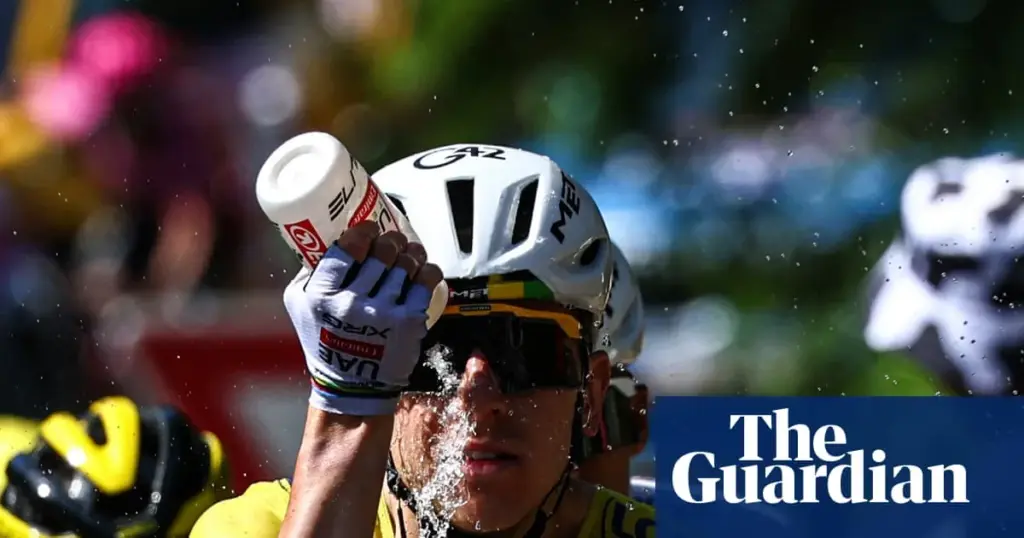
Tadej Pogacar has advocated for significant alterations to the professional cycling calendar, suggesting that races should avoid July and August in hot regions. His comments followed a day of intense temperatures during the Tour de France, where Mathieu van der Poel secured victory in the shortened ninth stage from Malemort to Ussel. Tom Pidcock finished third in the stage.
The Slovenian rider, a four-time winner of the Tour de France, indicated that while earlier stage starts might be a partial solution, a more comprehensive change to the racing schedule is needed. He noted that starting stages earlier, perhaps at 8 or 9 AM, would require riders to adapt to waking up around 5 AM. However, he expressed that even earlier starts might not fully address the issue if stages still conclude during the hottest parts of the day.
The ninth stage, characterized by its undulating terrain, included three challenging climbs within the final 80 kilometers and nearly 2,700 meters of altitude gain. Despite being shortened due to the heatwave, the high pace and demanding contours impacted several riders in the peloton.
Pidcock, racing for Pinarello-Q365, described feeling strong during the stage, despite a “manageable” saddle sore. He was a key participant in a 15-rider breakaway group that also included Van der Poel of Alpecin-PremierTech. Pidcock experienced a mechanical issue with his gears on the final climb, which hampered his ability to contend for the win in the sprint finish.
The Professional Cyclists Association (CPA) has also voiced concerns, emphasizing the necessity of fully implementing extreme weather conditions protocols. The CPA echoed Pogacar’s sentiments, stating that summer race start times must evolve to safeguard athlete health and called for discussions with all stakeholders during the winter to find solutions before the summer of 2027.
In an effort to mitigate the effects of the heat, many riders resorted to ice baths in team vans, with some teams even utilizing paddling pools and tin baths to quickly lower core body temperatures after racing. The Decathlon CMACGM team, for instance, travels with a portable cryotherapy unit to aid rider recovery by reducing body temperature and promoting sleep.
Tiesj Benoot, a teammate of Paul Seixas, shared his experience with cryotherapy, describing it as more intense than an ice bath, involving sitting in a capsule at minus 120 degrees for approximately three minutes. Benoot also suggested that shortening the stage, as was done for the Ussel stage, offered minimal relief, as it only reduced racing time by about 40 minutes after eight days of consistent heat.
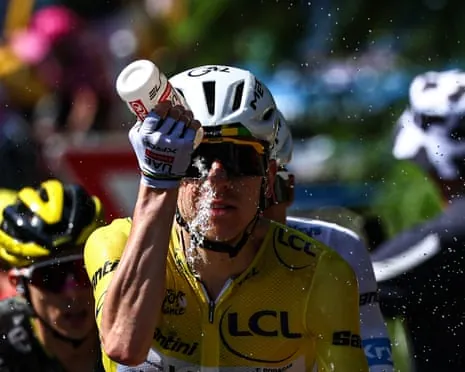
The Tour de France director, Christian Prudhomme, commented on the logistical challenges of earlier starts, noting that waking riders at 5 AM is difficult, even though it already occurs for anti-doping controls. The heatwave has prompted calls for a reevaluation of race scheduling, particularly as temperatures are predicted to remain high into the middle of the following week.
The ninth stage saw Mathieu van der Poel finish in 3 hours, 27 minutes, and 51 seconds. Tadej Pogacar maintained the leader’s yellow jersey, finishing six seconds behind the winner in the chasing peloton.
Read Also
Source: theguardian.com

