Linda Nosková wins Wimbledon title after recovering from second-set setback


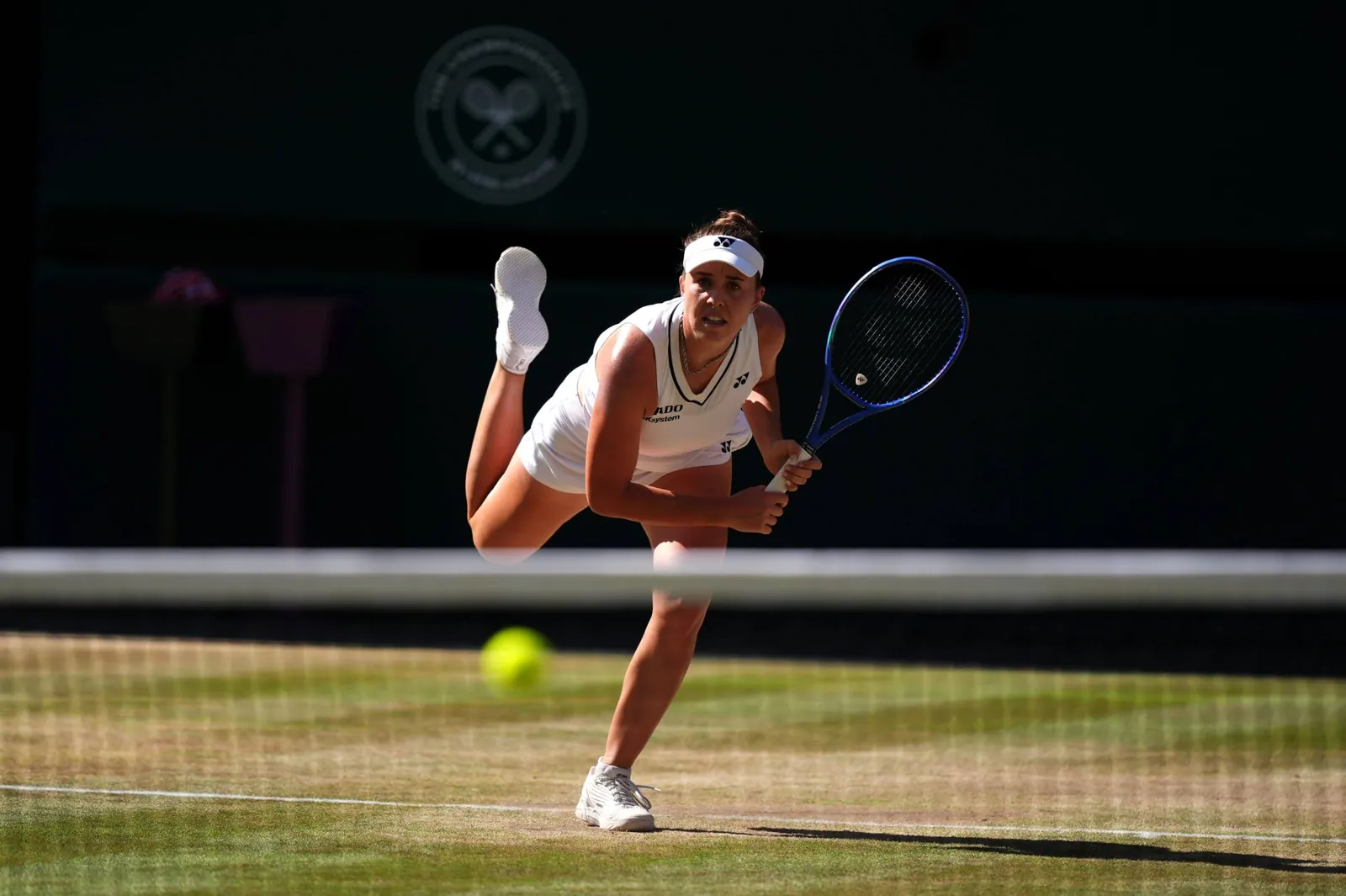
Linda Nosková secured her first Grand Slam singles title at Wimbledon, defeating Karolína Muchová 6-2, 5-7, 6-3 in an all-Czech final on Centre Court. The 21-year-old, seeded No. 9, overcame the No. 10 seed in a match characterized by shifts in momentum, ultimately triumphing after losing five championship points in the second set.
Nosková’s victory makes her the youngest Wimbledon women’s champion since Petra Kvitová in 2011. Her performance was marked by strong serving and returning, particularly in the opening set, where she effectively neutralized Muchová’s service game.
Nosková’s Dominance and Muchová’s Struggle
Throughout the tournament, Nosková’s serve had been noted for its potency, a factor that proved crucial in the final. In the first set, Nosková’s serving was exceptional, preventing Muchová from establishing a rhythm. She also returned with authority, breaking Muchová’s serve for a 6-2 lead. This early dominance was evident in key moments, such as when Nosková held to love for 2-1, with Muchová failing to return a single shot.
Nosková’s aggressive play, often targeting Muchová’s forehand, yielded significant rewards. Muchová, who had shown power and ferocity in her forehand during earlier rounds, struggled with stability in the first set, accumulating nine forehand errors. Nosková’s secure serve reduced the number of shots she needed to hit, increasing the pressure on Muchová’s baseline game.
One notable instance occurred at 4-1 in the first set, with Nosková serving. Muchová had an opportunity for an inside-out forehand but left the shot short, allowing Nosková to capitalize and maintain her lead. This early control allowed Nosková to largely cruise through the remainder of the set.
Second Set Comeback and Third Set Decider
Nosková, known for her powerful game, also demonstrated a blend of power and touch throughout the match. In the very first game, she executed a crosscourt drop shot that caught Muchová off guard, showcasing her variety. This tactical approach continued, with Nosková incorporating slices, drop shots, and lobs into her game, matching Muchová’s own varied play.
However, as Nosková approached her first championship points, her game became more erratic. She attempted to power through, resulting in a double fault and wild forehands. Her variety percentage decreased significantly during this period. Muchová, in desperation, elevated her level, saving three championship points in the seventh game of the second set through smart decision-making that forced Nosková into awkward shots.
When Nosková served for the match at 5-3, nerves appeared to affect her play. She alternated between aces and double faults, and her forehand broke down. Muchová saved another championship point and six break points before eventually breaking Nosková’s serve for 5-4. Muchová then held for 5-5, winning five consecutive games to take the second set. Nosková left the court to regroup after this significant shift in momentum.
Despite the second-set collapse, Nosková managed to regain her composure. Muchová, reflecting on the match, described her second-set comeback as requiring significant power and strength. She felt the crowd’s support and the momentum shift, but the start of the third set proved challenging. Muchová had three opportunities to break serve at the beginning of the decider, but Nosková broke her instead for a 2-0 lead and maintained control to secure the victory. Muchová did not convert a break point opportunity in the third game that would have put her back on serve.
Muchová will achieve a new career-high ranking of World No. 6 despite the loss. She remains motivated to improve and pursue a Grand Slam title.
Read Also
Source: wtatennis.com

