FIFA initiates investigation into post-World Cup final altercation between Argentina and Spain

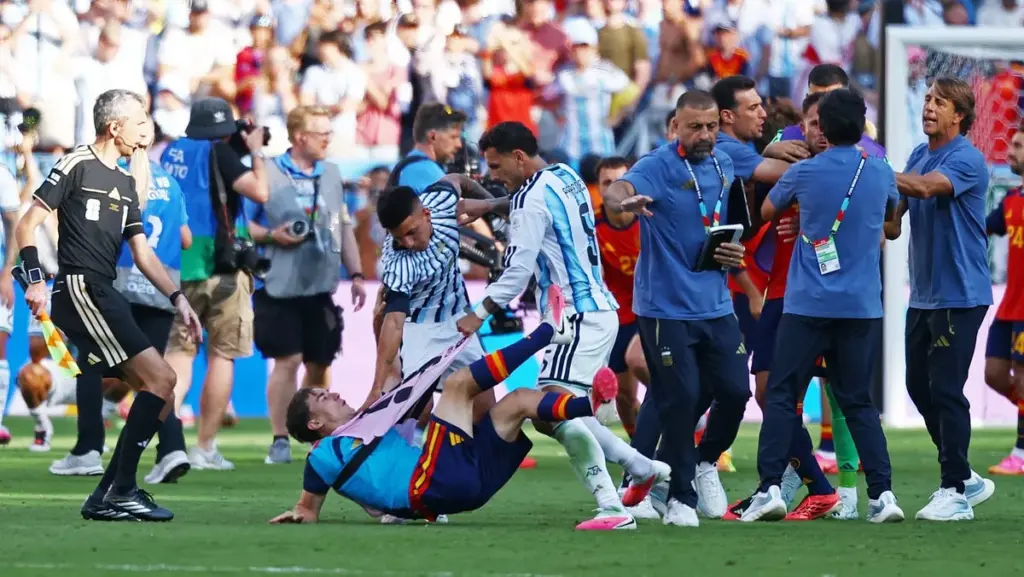
Post-Match Altercation Leads to Investigation
FIFA has launched an investigation into the post-match incident that occurred following the World Cup final between Argentina and Spain. A prosecutor has been appointed by FIFA‘s disciplinary committee to examine potential breaches of the Disciplinary Code. This review follows an examination of relevant match reports from the game.
The investigation could result in significant suspensions for individuals involved in the altercation. Initial reports suggest that Argentina may have instigated and escalated the situation. Further details regarding the investigation will be communicated upon the completion of the prosecutor’s report.
FIFA‘s disciplinary committee automatically reviews all red cards issued during matches. Additionally, FIFA has the option to appoint a disciplinary and ethics prosecutor who can request the initiation of disciplinary proceedings and propose measures against member associations, clubs, and individuals.
Key Incidents During and After the Final
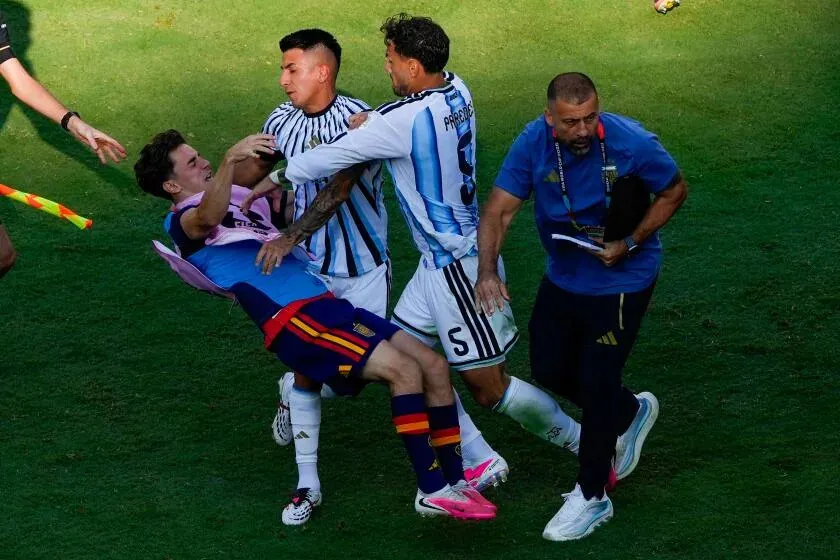
During the final, Argentina‘s Leandro Paredes received a red card after Spain‘s victory. This card was issued for his actions that reportedly sparked a confrontation between the two teams at MetLife Stadium. Paredes was observed grabbing Spain‘s Eric Garcia by the throat and pushing him to the ground in front of an assistant referee and Argentina coach Lionel Scaloni.
Later, Paredes also reportedly pushed Spain midfielder Gavi. Video footage from the post-match events also appeared to show Argentina defender Nahuel Molina throwing a punch towards Spain captain Rodri. Additionally, video has surfaced allegedly showing Argentina assistant coach Roberto Ayala punching Spain‘s Dani Olmo after the match.
These incidents occurred after a tense match that saw Spain secure a victory in extra time. Argentina was reduced to ten men when Enzo Fernández received a second yellow card for a tackle, forcing his team to play with a numerical disadvantage for the remainder of the game.
The World Cup final itself was notable for several reasons, including being the first to be played across three countries and featuring 48 teams. The tournament saw significant attendance, nearly doubling the previous record. Norway‘s Erling Haaland and Cape Verde‘s Vozinha were noted for their performances, and both Egypt and Canada achieved their first World Cup victories, advancing to the round of 16.
Spain‘s performance in the tournament was particularly strong, conceding only one goal across eight games. This allowed them to dethrone the reigning champions and become the first nation to hold both the men’s and women’s World Cup titles simultaneously. Spain also held Argentina without a shot into extra time during the final, a first in a World Cup final, and extended their unbeaten streak to 38 games overall.
Spain‘s winning goal came from substitute Ferran Torres in the second extra-time period. This victory not only made Spain the first country to be both men’s and women’s world champions at the same time but also the first to be men’s world, European, and Olympic champions concurrently. Spain is also the second-youngest team to win the World Cup in 56 years.
Reactions and Future Implications
Argentina coach Lionel Scaloni addressed the media after the match, stating, “We’ve been great in victory and we need to be great in defeat.” He acknowledged that the team accepts the loss. Scaloni, who later became emotional, mentioned that he had already cried in the dressing room. He has lost only twice in 15 World Cup games.
Spain‘s manager, Luis de la Fuente, reflected on his team’s journey, noting that many players on the World Cup team, including Dani Olmo, Mikel Merino, Mikel Oyarzabal, Unai Simón, and Rodri, had previously won U19 and U21 European titles under his guidance. He emphasized the importance of the team’s process and the quality of Spanish footballers. De la Fuente highlighted that the team’s success was built on good, supportive, and generous individuals with strong values.
The next match for Spain is a UEFA Nations League game against England in September. Spain is also set to co-host the 2030 World Cup, which could make them the first country to defend its title on home soil.
Read Also
- Madrid prepares for World Cup celebration as Spain defeats Argentina in final
- New York area hosts first World Cup halftime show with star-studded performances
- Bryson DeChambeau reportedly threatened to contact Trump over Open Championship penalty
- Dana White criticizes World Cup production team after final match
Source: sports.yahoo.com

