Madrid prepares for World Cup celebration as Spain defeats Argentina in final

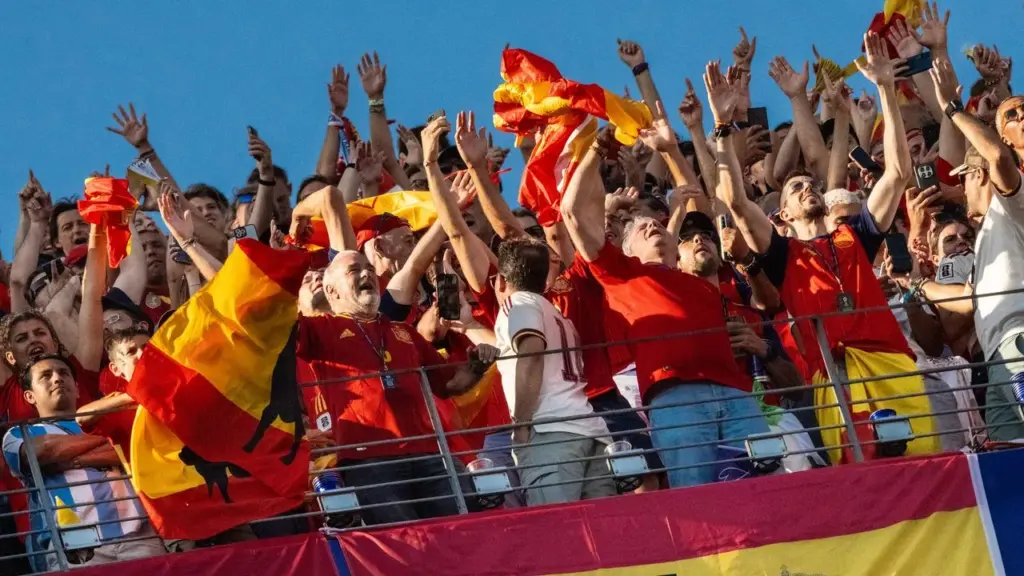
Spain secures World Cup victory
Spain emerged victorious in the World Cup final against Argentina, a match that concluded in New Jersey. The win marks Spain‘s second men’s World Cup title, following their previous triumph in South Africa in 2010. The team, known as La Roja, was met with a hero’s welcome upon their return to Madrid.
The final match saw Spain‘s persistent attacks against Argentina, the reigning champions. Despite Argentina‘s efforts to defend, including physical play, Spain, described as a technically accomplished team, maintained pressure. Emiliano Martínez, Argentina‘s goalkeeper, was noted for his performance in repelling shots.
Messi’s final World Cup appearance
For Lionel Messi, the final match appeared to mark the end of his World Cup career. Surrounded by tens of thousands of fans at MetLife Stadium and billions watching globally, Messi was observed alone after the final whistle. While Spain‘s dugout emptied with players celebrating, Messi remained by himself.
Following the match, Ferran Torres was the first player to reach Messi. Messi‘s Argentina teammates were involved in a confrontation, with Leandro Paredes at the center. Enzo Fernandez received a sending off, leaving Argentina shorthanded as they faced extra time for the third time in the tournament.
Argentina‘s coach, Lionel Scaloni, noted the team’s inability to compete head-to-head. Messi had limited touches in the initial minutes of the game, and Unai Simon did not make a save until stoppage time. Messi‘s expected goals (xG) were 0.03.
As Rodri received the player of the match award, chants of “ME-SSI, ME-SSI!” were heard. Messi then led his team to receive their runners-up medals from U.S. President Donald Trump. He was later seen weeping as Spain lifted the World Cup, with Messi and Argentina‘s backs turned towards their fans.
The final match’s pattern echoed the 1990 final, where Argentina, then champions, did not register a shot on target against West Germany. In the recent final, when Torres scored, Messi reacted with visible disappointment, sensing the end of the game. Giuliano Simeone had a late opportunity that could have led to penalties.
Messi‘s career has been marked by significant achievements, including Argentina winning the Copa America in 2021 and retaining it, and winning the World Cup in 2022. He had previously stated that he had “completed the game” at the last World Cup in Qatar.
Despite Kylian Mbappe securing the Golden Boot in the third-place play-off and becoming the World Cup‘s all-time leading scorer, Messi holds many other records in the competition. His sixth and likely final World Cup appearance was described as mostly astonishing, bringing focus back to football.
The game was played under the observation of notable figures, including King Felipe VI of Spain and President Donald Trump. Javier Milei, Argentina‘s president, watched from his residence in Buenos Aires. The event also featured a halftime show.
Spain‘s team, coached by Luis de la Fuente, is characterized by its technical and resilient play. Rodri, the team’s central midfielder and captain, was a key figure. Rodri, who plays club football for Manchester City, won the Ballon d’Or and demonstrated his dominance during the World Cup.
Messi, despite his age, continued to influence the game, even if his role involved more interpretation than constant running. A photograph circulated before the game showed Messi at 20 years old with Lamine Yamal as a baby. Messi has scored a significant number of his World Cup goals since he was 35.
In the ninetieth minute, Aymeric Laporte, a Spain defender, body-blocked Messi. Shortly after, Enzo Fernández received a second yellow card for a foul on Pau Cubarsí, leading to his ejection. This final match was the 104th game of the longest World Cup in history, which began on June 13th at MetLife Stadium.
Madrid’s grand celebration plans
More than a million people are anticipated to gather in central Madrid to celebrate Spain‘s World Cup victory. The team arrived at Madrid‘s Barajas airport at 2:30 PM local time on Monday. Rodri, Spain‘s captain, was seen waving the trophy as he exited the plane, wearing his medal.
The team’s official itinerary includes a reception at the Zarzuela palace with King Felipe and Queen Letizia around 4:30 PM. Following this, they are scheduled to meet Spain‘s socialist prime minister, Pedro Sánchez, at the Moncloa palace around 6 PM.
The victory parade is set to begin with the team traveling by bus from Moncloa. The main festivities, featuring music and expected large crowds, will take place at the Plaza de Cibeles, near Madrid city hall. Madrid‘s mayor, José Luis Martínez Almeida, confirmed preparations for the homecoming, noting the peaceful celebrations that followed the victory.
Musical events at Cibeles are expected to start around 6 PM, with the parade scheduled for 7 PM, though timings are subject to change. The victory has been widely celebrated across Spain, with many following the match in various public venues. The Spanish press has lauded the win as a “unique collective experience” by a young and diverse team.
Political figures, including Prime Minister Sánchez and Alberto Núñez Feijóo, leader of the People’s party, have congratulated the team. Santiago Abascal, leader of the Vox party, also offered his congratulations. The Spanish postal service, Correos, announced a special stamp to commemorate the achievement, featuring the word CAMPEONES and two stars for Spain‘s World Cup victories.
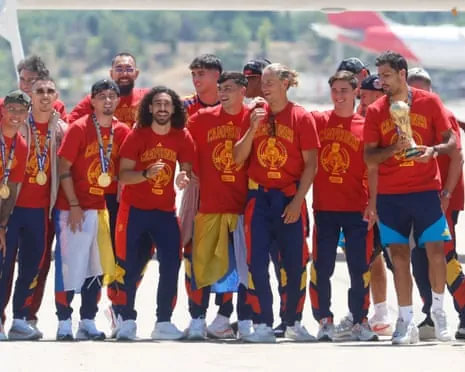
The celebrations in Madrid are expected to draw a significant crowd, honoring the team’s success in the World Cup final.
Read Also
Source: nytimes.com

